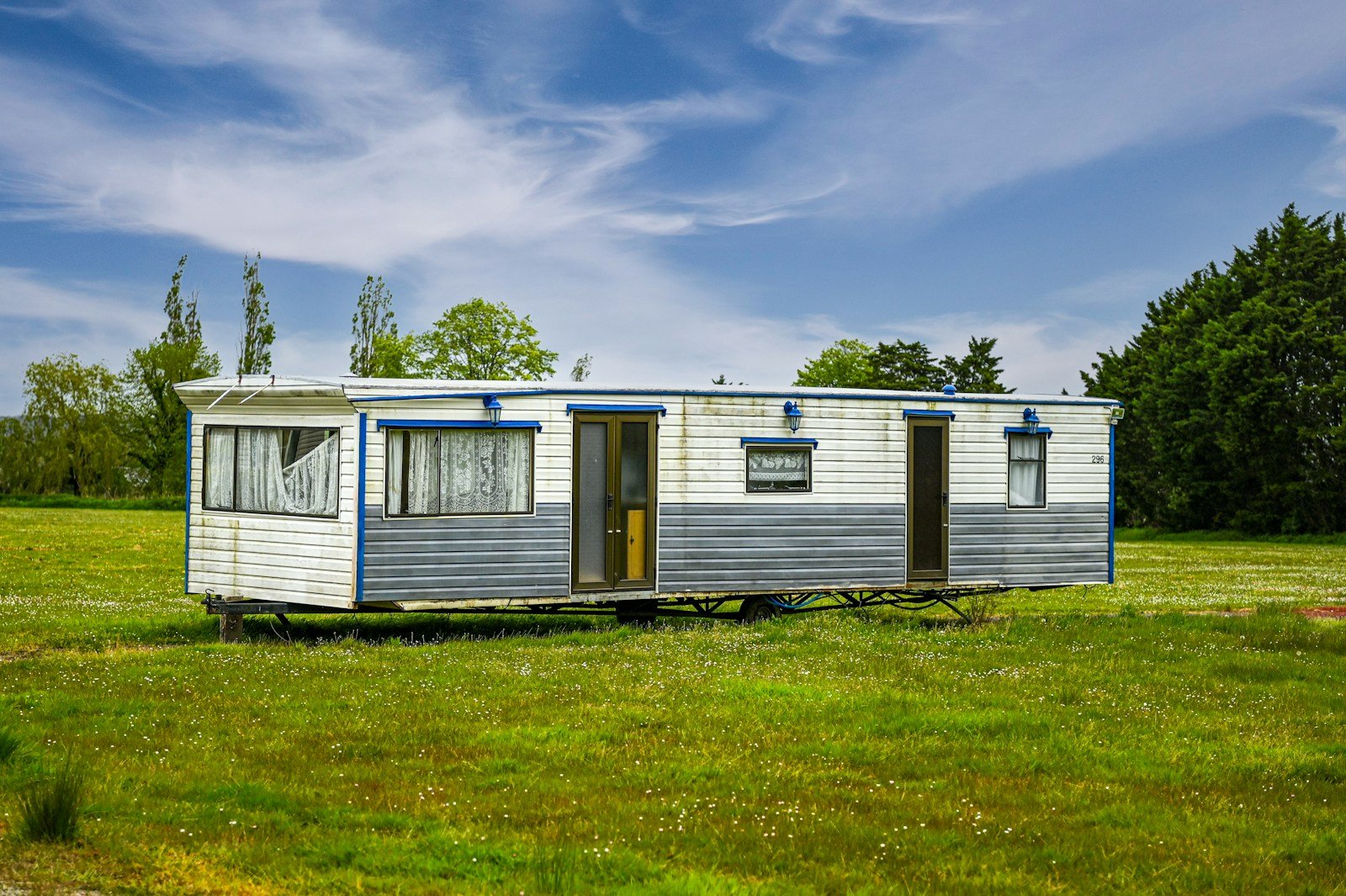
Three chapters of Mississippi’s factory-built home regulations took effect July 1, 2026, including the rewritten Uniform Standards Code. If you own a manufactured or modular home in Tishomingo, Prentiss, or Itawamba County, nothing about your house changed that morning. What changed is the rulebook the next installer works from — and the set-up is the part that touches insurance hardest.
Here’s the piece most people don’t know: in Mississippi, factory-built homes are regulated by the State Fire Marshal’s Office, which is a division of the Mississippi Insurance Department. Not a housing agency. The insurance department. That has been true since 1970, when the state first assigned oversight of what were then called mobile homes to the Fire Marshal.
What that office actually does
It licenses the manufacturers, the retailers, the developers, and the installer-transporters. It enforces the federal construction standards under contract to HUD. And, in its own words, it “monitors proper anchoring and blocking of factory-built homes.”
Anchoring and blocking is the unglamorous part — the piers the home sits on and the straps that hold it down. The Fire Marshal’s own page is blunt about how much it matters:
“Many, if not a majority, of consumer-related problems with Factory-Built Housing are caused by faulty or inadequate set-up.”
That sentence is from the state, not from us, and it explains why an underwriter looking at a manufactured home asks about tie-downs before almost anything else. A house that isn’t secured to the ground behaves differently in a wind event than one that is. Everything downstream of that — how a carrier prices the risk, whether it will write it at all — starts there.
The regulator’s own safety guidance
The Fire Marshal’s page lists what it expects owners to know, and it’s short enough to repeat in full:
- The home should be installed by an installer-transporter licensed by that office and tied down properly so it stays stable in a storm.
- Every home is designed to be tied down the way its own installation manual describes. If the manual didn’t come with the home, the manufacturer can supply one; if it can’t be found at all, the office keeps minimum standards on file.
- Working smoke detectors, and a fire extinguisher.
- A weather radio that wakes itself up when an alert fires.
A new factory-built home carries a one-year warranty. If a defect can’t be resolved with the dealer and manufacturer inside that year, the office takes complaints at 888-648-0877 — it asks that you try the dealer first. Part of what it does when a complaint comes in is inspect the home to confirm it was set up correctly in the first place.
The number the state itself won’t stand behind
The Fire Marshal’s page opens with a striking figure: as many as 520,000 Mississippians, about a quarter of the state, live in a factory-built home. Read the next few words and the page tells on itself — the estimate comes from the Mississippi Manufactured Housing Association, “using 1990 Census figures.”
Nineteen ninety. That number is old enough to vote twice over. We’re repeating it because it’s the state’s own published figure and because it’s honest to say what it rests on. Nobody in this business, including us, can tell you with any confidence how many manufactured homes sit in Tishomingo County today. That’s a real gap, and pretending otherwise wouldn’t help anybody.
The other honest note: a properly anchored home is not the same thing as a well-insured one, and the reverse holds too. The Fire Marshal’s decal on the outside says the set-up was inspected. It says nothing at all about what the policy on the inside does.
What’s worth doing with this
If a home was set up recently, the paperwork from the installation is worth keeping with the policy rather than in a drawer somewhere — carriers ask about it more often than owners expect. If the installation manual is still around, the tie-down section is the part underwriters care about.
Coverage for manufactured homes is generally written on its own form rather than on a standard homeowners policy, and those forms vary — on how the home itself is valued, on how detached structures are handled, on wind deductibles. Which way yours reads is written in your policy and nowhere else.
If you’d like somebody to read it with you, come by the Belmont office, see our home insurance page, or call or text 662-454-7831.
This article is general information about how coverage typically works, not advice about your specific situation. Your policy is the contract, and it’s the only thing that says what you have. If you’d like someone to read it with you, that’s what we’re here for.