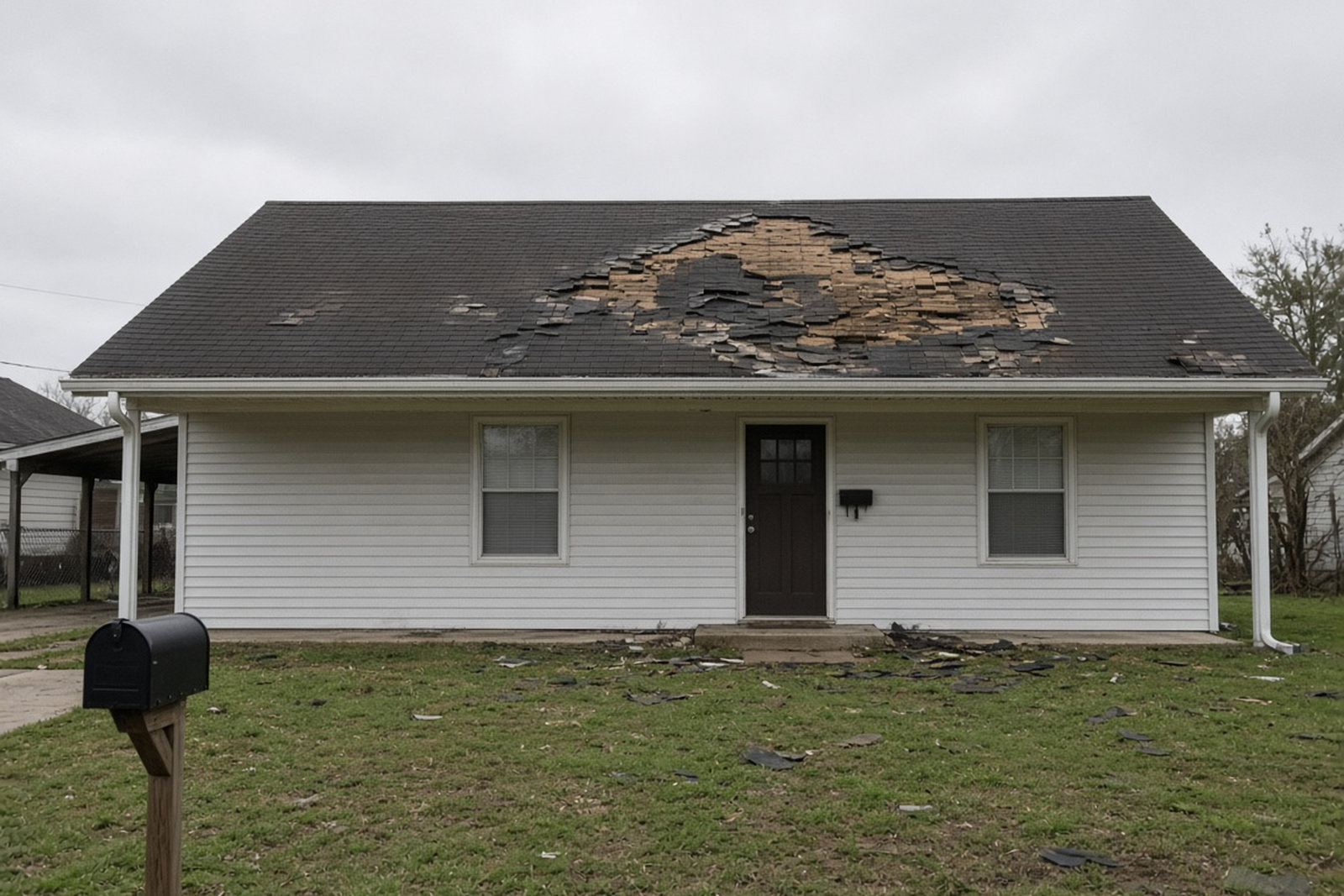
If you have a mortgage, the check for damage to your house usually comes made out to you and your mortgage company together. That’s because homeowners policies on financed homes typically name the lender as mortgagee, which gives it a right to be paid when the structure it lent against is damaged. You can’t cash the check alone. The lender has to endorse it, and on larger claims it often holds the money and releases it as the repairs get done.
People are usually surprised by this the week after a storm, when they need a roofer and the money is sitting in two names.
Why the lender is on the policy
When you financed the house, the loan required homeowners insurance and required that the lender be listed on the policy. That listing comes with a mortgage clause, a section of the policy that protects the lender’s interest in the building. The idea is simple: the house is the collateral for the loan, so if it’s damaged, the lender wants to see it repaired.
That clause usually applies to the dwelling part of the claim, and sometimes other structures like a detached garage or shop. It typically doesn’t apply to payments for your belongings or for additional living expenses while you’re out of the house. Those usually come to you alone. Policies vary on this, and your policy is the thing that answers it.
What happens after the check arrives
For a small claim, the lender may simply endorse the check and send it back. For larger claims, many servicers use a loss-draft process:
- You send the check to the lender’s loss-draft or insurance claims department, endorsed by you.
- The lender deposits it into an account it controls.
- It releases the money in stages, often an initial amount and then more after an inspection or a contractor invoice shows the work progressing.
Thresholds and paperwork vary by lender and by whether the loan is current. Some servicers release everything at once on smaller amounts. Others want a signed contractor agreement, a W-9 from the contractor, and an inspection before the final payment.
The part that doesn’t flatter anybody
This process is slow, and it isn’t the insurance company slowing it down. Once the carrier issues the check, the timeline belongs mostly to the mortgage servicer, which may be a company in another state that has never seen Lee County. Homeowners in Tupelo and Saltillo sometimes wait weeks on a lender endorsement after the claim itself is settled. That’s frustrating, and nobody at a local agency can make an out-of-state servicer move faster.
What does help is knowing it’s coming.
How to make it go faster
- Call the servicer’s loss-draft department as soon as you file the claim, not when the check arrives. Ask what documents it needs and where to mail them.
- Get a written contract from your contractor that shows the scope and price, since many servicers ask for one.
- Keep copies of everything: the claim settlement letter, the check, photos, and invoices.
- Make sure the mortgagee listed on your policy is current. Loans get sold. If the policy still lists an old lender, the check can be made out to a company that no longer services the loan, which adds a delay nobody needs. We explained related lender mail in mortgage protection letters.
If the house was damaged in a storm, our post on what to do after storm damage walks through the first steps before any check shows up.
If you’d like us to check that your mortgagee information is up to date, or look over how your policy handles a dwelling claim, call or text 662-454-7831, visit our home insurance page, or request a quote. We’re happy to go through it at the Belmont office.
This article is general information about how coverage typically works, not advice about your specific situation. Your policy is the contract, and it’s the only thing that says what you have. If you’d like someone to read it with you, that’s what we’re here for.