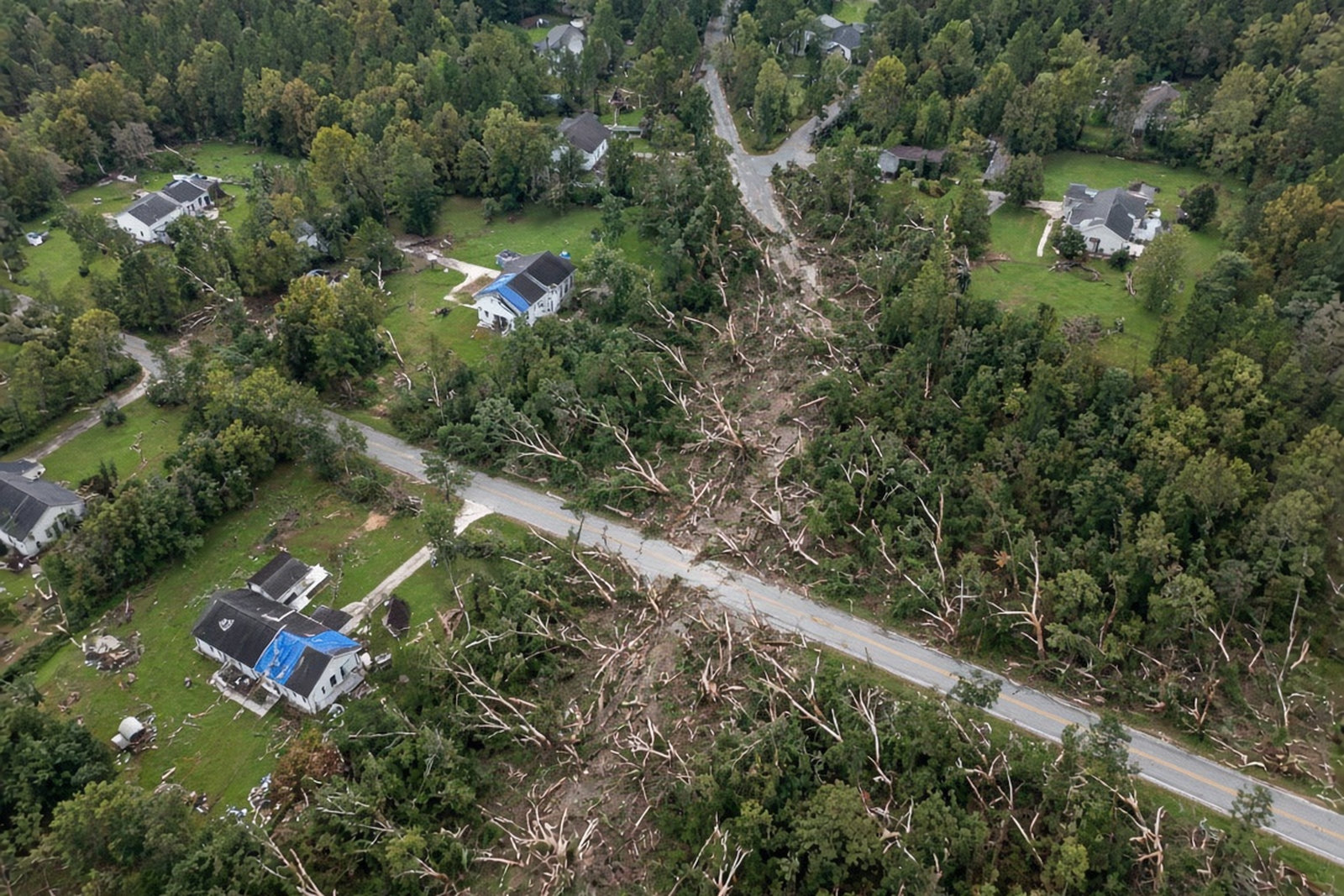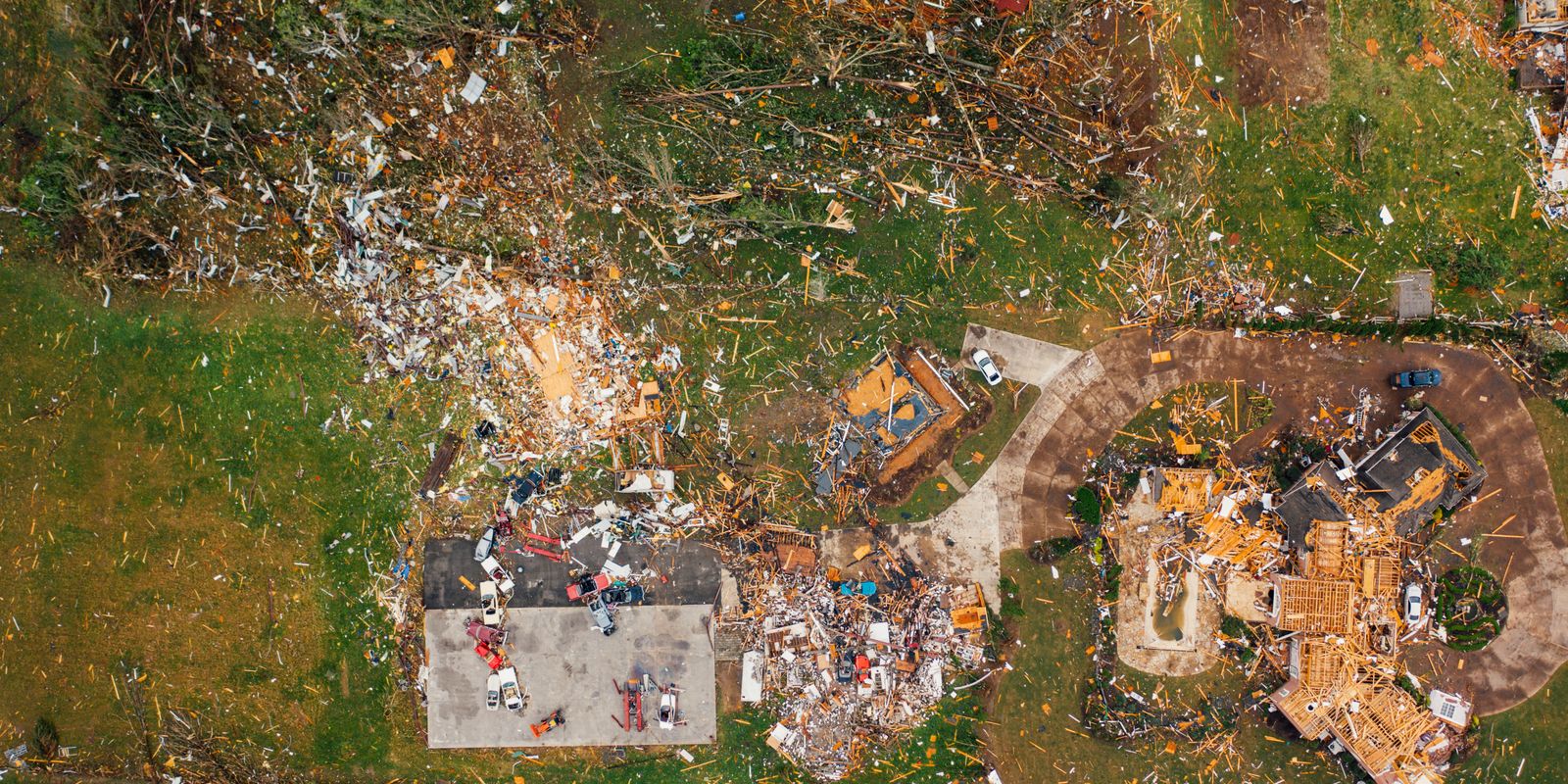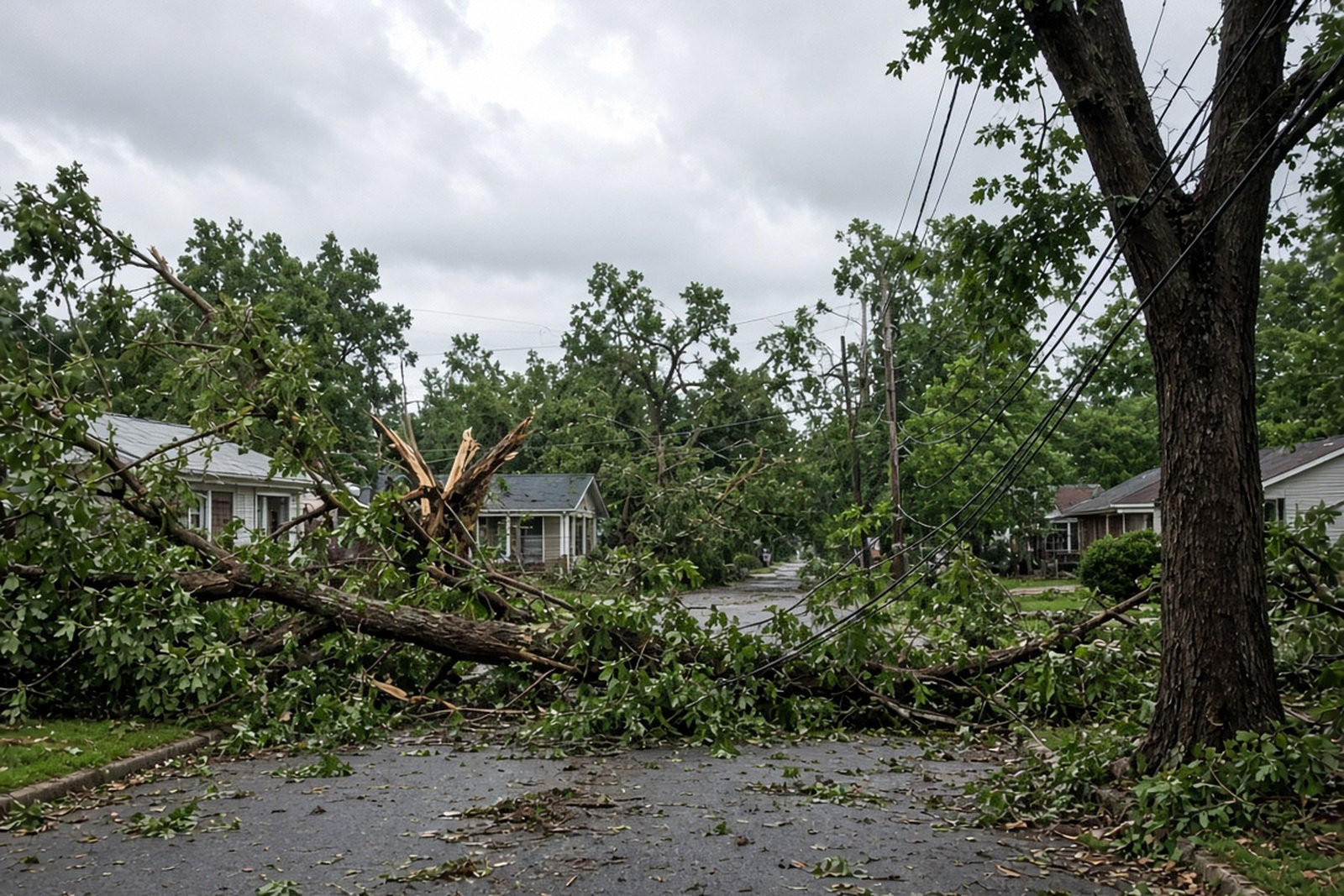
Lee County has 22 federal disaster and emergency declarations on record since 1973, according to FEMA’s own data. Eleven were for severe storms and five for hurricanes. But a declaration is not a check. FEMA’s household aid program, the part that can send money to a homeowner, opened in Lee County only eight times in those 53 years. When it did, the money was real but modest: about $4,749 per approved owner after the 2014 tornadoes and about $6,276 after the January 2026 winter storm.
We pulled the numbers from FEMA’s public data because “FEMA will help” and “FEMA never helps” are both things we hear across the desk in Tupelo, and neither is quite right.
What the 22 declarations were
FEMA’s declarations data for Lee County (county code 081) breaks down like this:
- Severe storms: 11, which is how FEMA files most tornado events
- Hurricanes: 5, for Dennis and Katrina in 2005, Gustav in 2008, and Ida in 2021, whose remnants reached this far inland
- Winter storm, snowstorm, and ice storm: 4 combined
- Biological: 2, both tied to COVID-19 in 2020
Seventeen were major disaster declarations and five were emergency declarations. The type matters, because each declaration turns on specific programs for specific counties. Many open only Public Assistance, the program that repays local governments for debris removal and road repair. That helps the county. It doesn’t put anything in a homeowner’s hands.
The eight times household aid opened
Individual assistance, FEMA’s household aid program, was designated for Lee County in 1973, 1991, twice in 2001, 2003, 2014, 2020, and 2026. Two recent events are missing from that list. The April 2011 tornado outbreak and the March 14–15, 2025 storms both brought major disaster declarations that included Lee County, but for public assistance only. Homeowners in the county with damage from those storms had no FEMA household program to apply to.
What owners actually received
FEMA publishes housing assistance totals for homeowners by county and ZIP code. Two events have enough data to compare.
April 28–May 3, 2014 tornadoes (DR-4175). 892 Lee County homeowners registered. 292 homes were inspected. 73 owners were approved, which works out to about 1 in 12. Approved owners received $346,658 in total, an average of about $4,749 each. Most registrations came from the 38801 and 38804 Tupelo ZIP codes, with Saltillo next.
January 23–27, 2026 winter storm (DR-4899). 747 owners registered, 458 were inspected, and 340 were approved, about 45 percent. Approved owners received $2,133,903, an average of about $6,276 each. Shannon had a higher share of registrations than its size would suggest: 110 registrations, 79 approvals.
The part that doesn’t fit the usual pitch
Insurance people like to say FEMA won’t help you. The 2026 numbers don’t support that. Nearly half the owners who applied after the winter storm got something, and more than $2.1 million reached Lee County households. If you went through that and FEMA came through, that wasn’t a fluke.
The fair reading is narrower. FEMA housing aid is meant to make a home safe, sanitary, and functional again, not to put it back the way it was. An average of a few thousand dollars buys a roof patch, a furnace repair, or a stretch of drywall. It doesn’t rebuild a house. And as 2011 and 2025 show, it only exists when a declaration includes household aid for your county, which is decided after the storm, not before.
Where homeowners insurance fits
A homeowners policy works on a different trigger. It doesn’t wait for a federal declaration or a county threshold. If a covered peril damages the house, the claim moves on the policy’s terms whether the storm was big enough to make the news or not. Most policies around here handle wind, hail, falling trees, and the weight of ice, with a separate wind or hail deductible on some. Flood is the exception. Rising water is excluded from standard homeowners policies and is always a separate purchase.
Policies vary on deductibles, roof settlement, and how ice damage is handled. The only thing that answers what yours does is the policy itself.
Talk it through
If the January storm left you wondering what your deductible or roof coverage actually looks like, see our home insurance page, or request a quote and a policy review. Call or text 662-454-7831 and we’ll go through it with you from Tupelo or any of our offices.
This article is general information about how coverage typically works, not advice about your specific situation. Your policy is the contract, and it’s the only thing that says what you have. If you’d like someone to read it with you, that’s what we’re here for.