The U.S. Fire Administration’s report on heating fires in residential buildings puts 20% of the year’s heating fires in January and the low point in June, July and August. Right now, in the second week of September, almost nothing is running. That is the whole argument for looking at a flue this month instead of in December: the equipment is cold, the people who service it are not yet booked four weeks out, and nothing has to be shut off to get at it.
Across 2017 to 2019 the USFA counted an estimated annual average of 34,200 residential building heating fires nationally, with about 165 deaths, 600 injuries and $367 million in property loss each year. Heating came in as the second leading cause of residential building fires, behind cooking.
The number that applies here more than most places
Eighty percent of residential heating fires happened in one- and two-family homes — while one- and two-family homes accounted for only 63% of all residential fires. Heating fires are disproportionately a house problem rather than an apartment problem.
Belmont, Tishomingo, Golden and Burnsville are built almost entirely of one- and two-family houses, a good many of them heated partly by a wood stove or a fireplace that gets real use from December through February. The national figure lands harder in a county like ours than it does in the national average it came from.
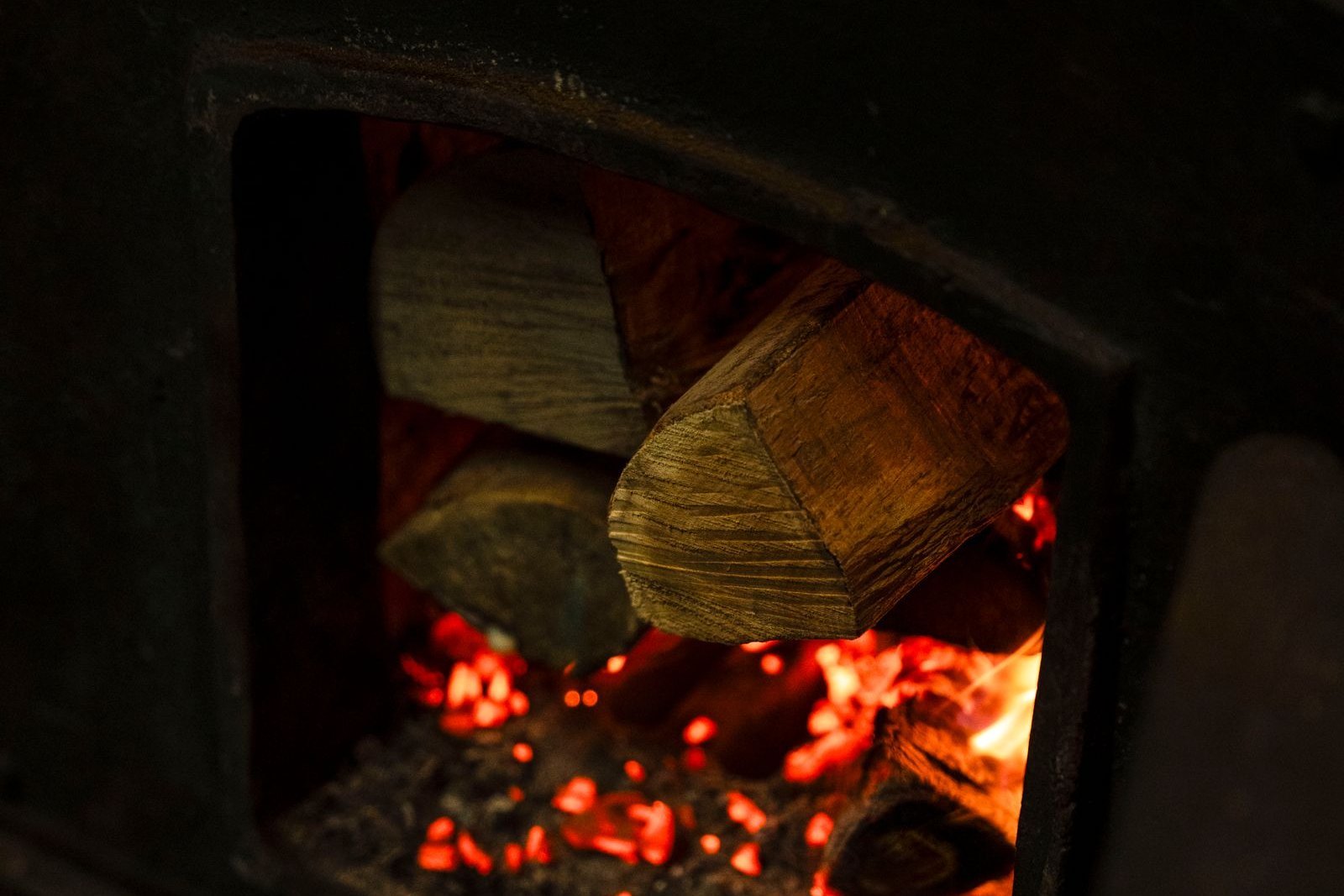
“Heating fires,” in the USFA’s definition, is broader than a chimney. It covers central heating units, fixed and portable local heating units, fireplaces, heating stoves, chimneys, and water heaters. The water heater in the closet is in that count.
The part that doesn’t support the scare
Here is the figure that cuts against everything above, and it comes from the same report.
Seventy-seven percent of residential heating fires were confined fires — contained to the chimney, the flue, or the fuel burner itself, with the flames never getting out into the house. And the USFA notes plainly that average losses for heating fires ran below those for other residential building fires.
So the honest summary is not “heating fires are a catastrophe waiting to happen.” It is closer to this: heating fires are common, they cluster in January, they happen mostly in houses like the ones around here, and the large majority of them stay inside the flue and never become a claim at all. A chimney fire that scorches the liner and stops there is a repair bill and a bad evening, not a rebuild.
The reason to look at the thing in September is not fear. It is that the 23% which do get out of the flue are the expensive ones, and the easiest point of intervention is a cold appliance in mild weather.
Where this sits in the insurance world
Fire is a named peril on essentially every homeowners form written in Mississippi, and has been for as long as the form has existed. That part is not the interesting part.
The interesting parts are the ones that vary. Wood-burning stoves and supplemental heat sources are a question most carriers ask on the application, and a few treat differently depending on installation, clearances, and whether the install was permitted and inspected. Some carriers ask for photographs. Some ask nothing. A stove that went in after the policy was written is a change the carrier does not know about unless somebody tells them, and a material change to the heating system is generally the sort of thing a policy expects to be told.
Separately, whether the damage to the appliance itself is handled the same way as damage to the house is a distinction worth reading. Damage to a structure from a fire and the failure of the equipment that caused it are not always answered by the same section of the same policy. Forms differ, and the one in the drawer is the only one that says how yours reads.
Reading your own
Two things worth doing while it is still 90 degrees, neither of which costs anything. Pull out the declarations page and see whether a supplemental heat source is listed or asked about anywhere. Then, if a stove or insert has gone in since the policy was written, make the call that puts it on the record.
See our home insurance page, come by the Belmont office, or call or text 662-454-7831 and we’ll read the heating section with you before the first cold snap.
This article is general information about how coverage typically works, not advice about your specific situation. Your policy is the contract, and it’s the only thing that says what you have. If you’d like someone to read it with you, that’s what we’re here for.