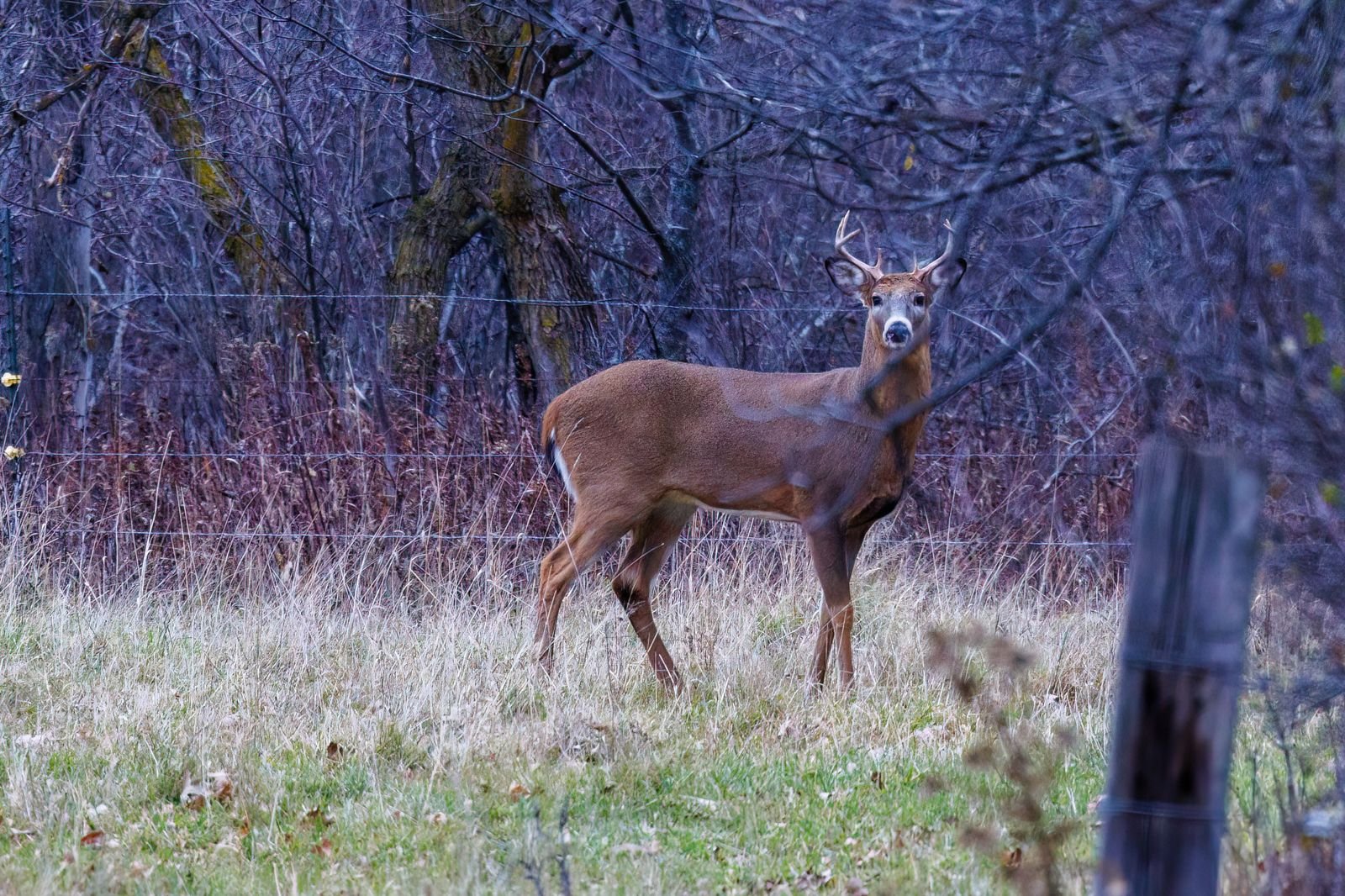
A deer comes out of the tree line on MS-25 between Iuka and Belmont, the truck hits it square, and the front end is gone. On most personal auto policies written around here, that is handled under comprehensive coverage, the part of the policy that pays for things that happen to the vehicle other than a collision with another car or object. It carries its own deductible, usually different from the collision deductible, and on many forms it’s the same section that handles hail, theft, and the limb that comes down on the hood.
Now change one detail. The driver sees the deer, swerves, misses it, and puts the truck in the ditch or into a pine. Same night, same deer, same road. On most forms that’s now a collision claim, because the vehicle hit an object. Different deductible, different section, and for rating purposes commonly treated as an at-fault loss. The deer walks off.
That is the single most useful thing to know about deer season and an auto policy, and it’s the reason the standard highway-safety advice is the same everywhere: brake, don’t swerve.
How much of this actually happens
A lot, and mostly on roads like ours. The Federal Highway Administration’s Wildlife-Vehicle Collision Reduction Study, a report to Congress, estimates one to two million collisions between vehicles and large animals in the United States every year, the great majority of them deer. It found that 89 percent of those crashes happened on two-lane roads. That’s MS-25. That’s MS-30 through the hills. That’s every county road between Burnsville and Golden.
The same study says roughly 4 to 10 percent of those crashes injure someone in the vehicle, about 26,000 people a year nationally. Most deer strikes are a vehicle claim, not a hospital visit, but the swerve is where the hospital visits come from.
Why the calendar matters here specifically
Archery season in the Hills unit opens October 1, and that puts more people in the woods and more deer moving. But the real spike in road crossings comes with the rut, when bucks stop paying attention to anything but does. MDWFP has spent more than twenty years running deer health checks to build a breeding date map for the state. For the northeast counties, that map shows mean conception dates running from late December into mid-January, depending on the county. MDWFP’s own note is that hunter-observable rut activity peaks about two weeks before the mean breeding date.
Put that together and the worst stretch on MS-25 is roughly the second week of December through the first week of January, at dusk and dawn, when the deer are moving and the drivers are commuting in the dark. It happens to line up with holiday travel.
What to read in the policy before then
Three things, none of which take long.
Whether the policy has comprehensive coverage at all. A liability-only policy, which is common on older trucks and second vehicles, has no part that pays for the insured’s own vehicle. A deer strike on that policy is a repair bill or a salvage title, full stop.
What the comprehensive deductible is. It’s often lower than the collision deductible, sometimes zero for glass, and people are surprised in both directions.
What the form says about animals. Most standard forms name contact with a bird or animal as a comprehensive loss specifically, so it doesn’t get argued into the collision section. Some older or non-standard forms are less clear. The declarations page shows the deductibles; the definitions section shows which bucket a deer falls into.
The honest part
A deer strike is a claim with nobody else to look to. There’s no other driver, no other carrier, no subrogation. It’s your policy or it’s your money, and the comprehensive deductible comes out first either way. For an older truck worth less than a couple of deductibles, comprehensive may not pencil out at all, and that’s a legitimate choice as long as it’s a choice and not a surprise in December.
And for what it’s worth, the deer will be there whether or not anybody reads the policy. Slow down after dark from Thanksgiving through New Year’s, watch the ditches on the curves past Bay Springs, and if one steps out, hit it straight.
See our auto insurance page, stop by the Belmont office with the declarations page, or call or text 662-454-7831 and we’ll find the comprehensive deductible and the animal language together before the rut.
This article is general information about how coverage typically works, not advice about your specific situation. Your policy is the contract, and it’s the only thing that says what you have. If you’d like someone to read it with you, that’s what we’re here for.