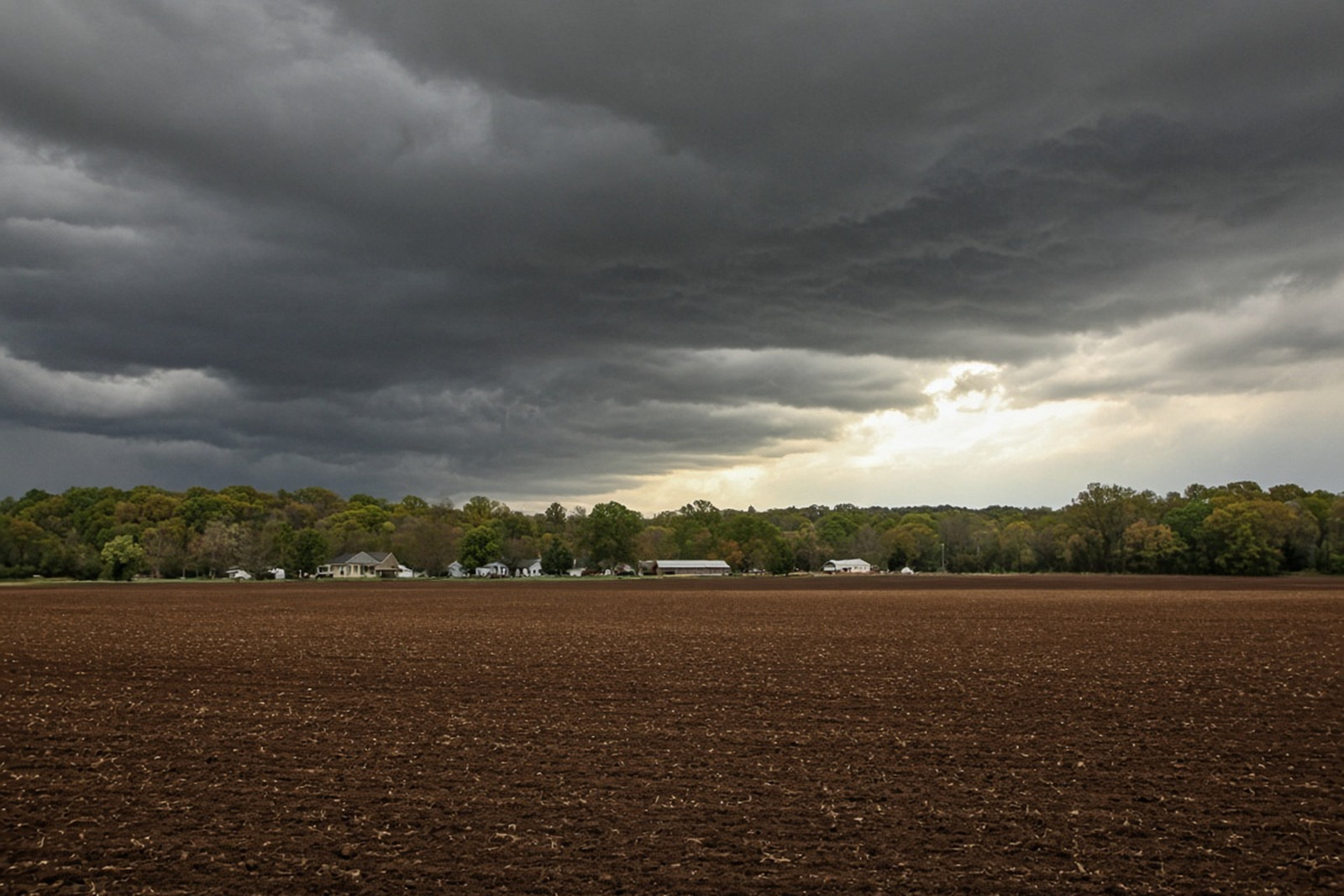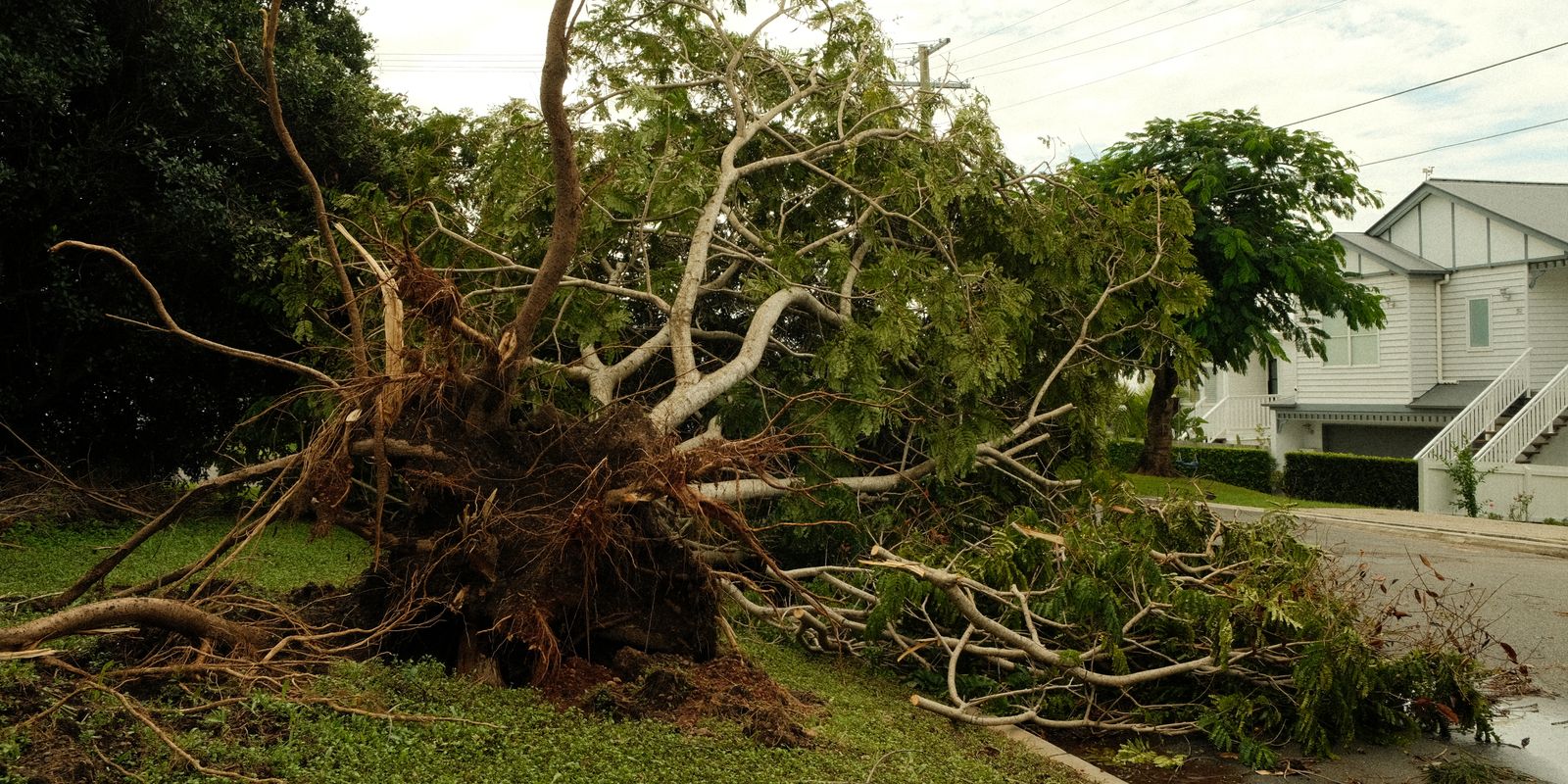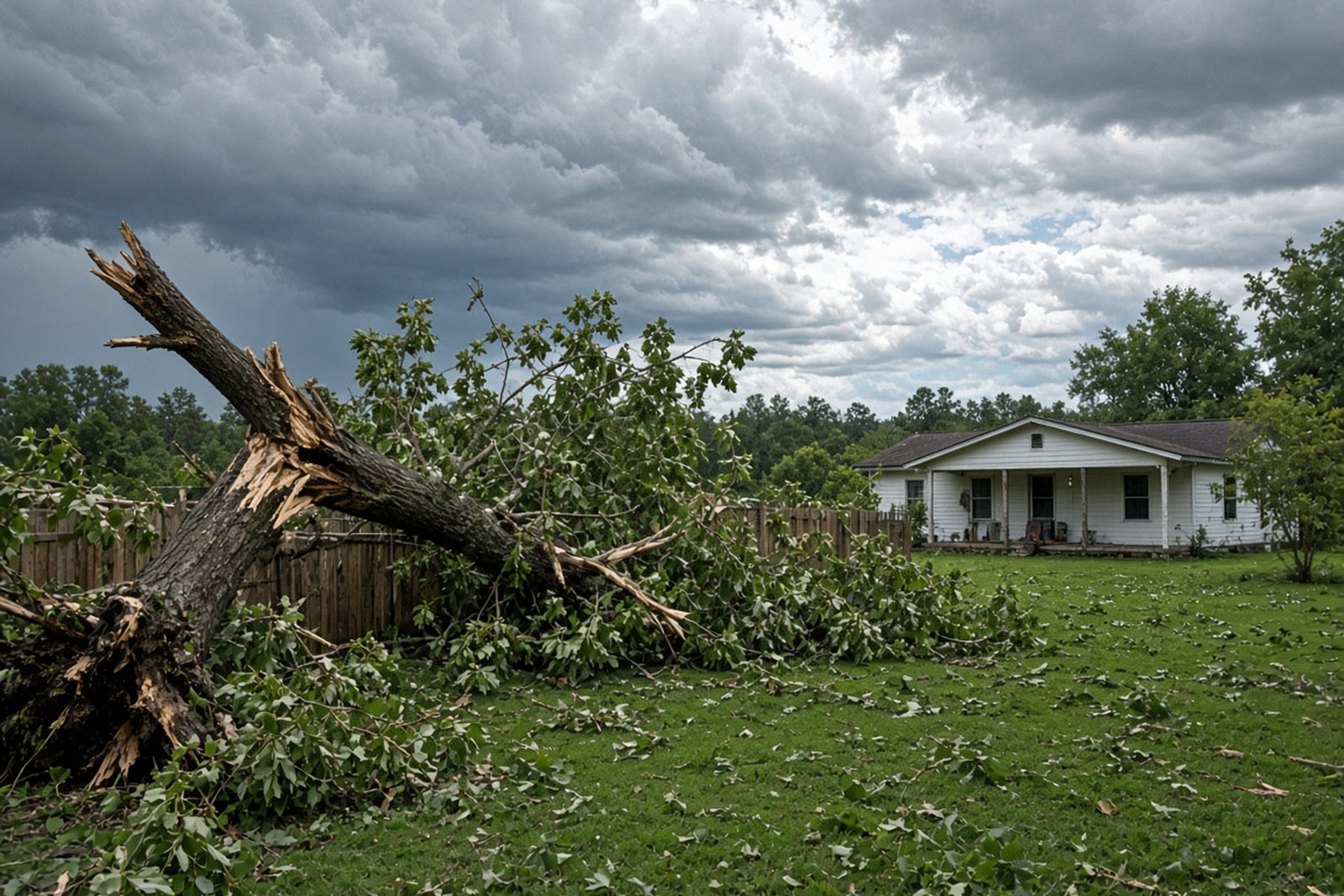
Straight-line wind, not tornadoes, is the storm that shows up most often in Alcorn County’s federal weather record. NOAA’s Storm Events Database lists 147 thunderstorm wind reports for the county, the first in June 1968 and the latest in March 2026, spread across 126 different days. Tornadoes appear 25 times on 24 days over a longer stretch going back to 1953. A Corinth homeowner is far more likely to file for a tree on the roof after an ordinary summer storm than for a tornado.
We pulled the full county record from NOAA’s public files because “tornado alley” gets the attention around here, and the everyday damage maker gets very little.
What 147 wind reports look like
NOAA logs a thunderstorm wind report when a storm produces gusts of about 58 mph or more, or knocks down trees and power lines. In Alcorn County the record breaks down like this:
- By decade: 2 reports in the 1960s, 12 in the 1970s, 16 in the 1980s, 22 in the 1990s, 38 in the 2000s, 27 in the 2010s and 30 so far in the 2020s.
- By month: June leads with 32, then July with 26, April with 21 and May with 18. April through July holds 97 of the 147.
- Off season: November has 8 reports and March has 11. Wind here is not only a summer problem.
- Most reports in one day: six on April 5, 2025, including an estimated 81-knot gust, about 93 mph, near Rienzi. That is the strongest wind estimate in the county’s record.
Since 2000, the county has logged at least one damaging-wind report in 25 of 26 years.
A caution on the rising count
The decade numbers climb, and it is tempting to read that as storms getting worse. Some of it is likely reporting. Before 1996 NOAA collected only a few event types, and spotter networks, radar and phone reports have all grown since. A 1975 storm that took down trees on a back road may never have made the database. We would not draw a trend line from these numbers, and we would be suspicious of anyone who did.
The finding that doesn’t fit the pitch
Wind is frequent here, but in the record it is usually not expensive. NOAA’s property damage estimates for all 147 wind reports add up to about $1.05 million. The county’s 25 tornadoes add up to about $5.35 million, roughly five times as much from one-sixth the events. Many wind reports list a few thousand dollars in damage, and 28 list no estimate at all. Those numbers are rough and not adjusted for inflation, but the shape is clear: in Alcorn County, the common storm is a tree-and-shingle event, not a total loss.
Alcorn also logs fewer wind reports than some neighbors over the same database. Tishomingo County shows 174, Itawamba 178 and Lee 346. If you live in Corinth or Rienzi and assumed you had it worse than Iuka, the record says otherwise.
How wind usually sits in a homeowners policy
Most homeowners policies list windstorm and hail among the perils they handle, for the house and for personal property. The differences between policies tend to live in three places:
- The deductible. Many policies carry a separate wind and hail deductible, sometimes written as a percentage of the dwelling limit. On a percentage deductible, the out-of-pocket amount grows with the house. Our post on wind and hail deductibles in Mississippi walks through the math.
- The roof. Some policies settle roof claims at replacement cost and some at actual cash value, which subtracts for age. On a 15-year-old roof, that difference can be most of the check.
- Trees. A tree that lands on the house is typically treated differently from one that falls in the yard and hits nothing. Removal limits vary.
FEMA rarely enters into it. As we found in Alcorn County’s disaster declarations, federal household aid has been scarce here, and a routine wind event never triggers it. The policy is what responds. Which deductible applies and how the roof is settled is something only your policy answers.
Before the next storm
If the March 15 storm left you wondering what your wind deductible actually is, see our home insurance page or request a quote and a policy review. Call or text 662-454-7831 and we’ll read it with you from our Iuka office.
This article is general information about how coverage typically works, not advice about your specific situation. Your policy is the contract, and it’s the only thing that says what you have. If you’d like someone to read it with you, that’s what we’re here for.