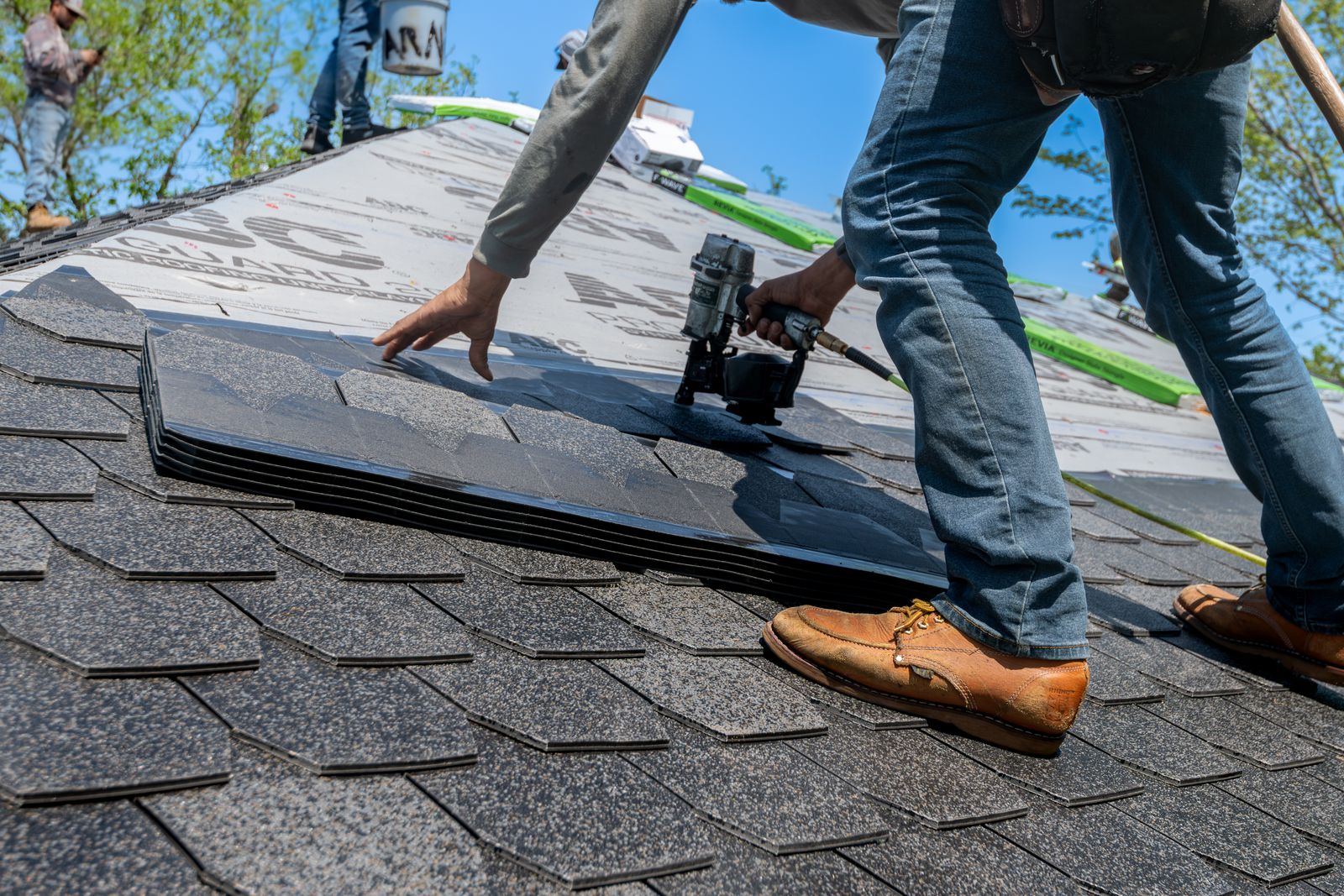
Two neighbors on the same road lose their roofs in the same hailstorm. Both have homeowners insurance. One gets a check that covers a new roof. The other gets a check that covers about half of one.
Nothing went wrong in the second claim. The policies were just written differently — and the difference was sitting on the declarations page the whole time.
Replacement cost versus actual cash value
This is the fork in the road, and everything else follows from it.
Replacement cost pays what it costs to put a comparable new roof on your house today, at today’s material and labor prices. Typically the carrier pays the depreciated amount first, then releases the rest once the work is done and you’ve submitted the invoice.
Actual cash value pays replacement cost minus depreciation — a reduction for the age, wear, and remaining useful life of the roof that was there. That’s it. There’s no second check when the work is finished, because the settlement already accounted for what the old roof was worth.
On a new roof, the two are nearly the same. On an older roof, they are not remotely the same. That’s the whole story.
What depreciation actually does to a roof claim
Depreciation isn’t a penalty. It’s an accounting for the fact that a roof is a consumable — it has an expected service life, and every year of that life it uses up some of its value.
Carriers apply depreciation to roofs on a schedule tied to age and material. Architectural shingle, three-tab, metal, tile — they don’t age at the same rate, and they don’t depreciate at the same rate. A roof near the end of its expected life carries a large depreciation reduction. A roof in its first years carries very little.
The practical effect: on an actual cash value settlement, the older your roof is at the moment the hail hits, the smaller the check. The contractor’s bid doesn’t change. Your share of it does.
The roof schedule endorsement — read this one carefully
A roof schedule endorsement — you’ll also see it called a roof surfacing payment schedule, roof settlement endorsement, or similar language depending on the carrier — modifies how the policy pays for the roof specifically. It converts roof loss settlement to a depreciated basis, with the payout determined by the roof’s age at the time of the loss according to a schedule printed right in the endorsement.
The rest of your dwelling coverage may still be replacement cost. The roof, under the endorsement, is not.
Why do these exist? Because they let carriers keep writing homes with older roofs in storm-exposed states instead of declining them. That’s a real benefit — a policy with a roof schedule is often better than no offer at all. But it is a trade, and you deserve to know you made it. If the endorsement is on your policy, the schedule is not fine print. It’s the claim math.
Why roof age drives both eligibility and settlement
Roof age does two jobs in underwriting, and homeowners usually only hear about the first one.
Eligibility. Past a certain age, many carriers won’t write the home at all, or will only write it with a roof settlement endorsement attached. Roof age is one of the first questions on a new home quote for exactly this reason.
Settlement. Even when coverage is offered, roof age sets the depreciation and therefore the size of the check.
So the same fact — the roof went on in a year you may have to go dig through paperwork to find — determines both whether you get a policy and what that policy is worth when a storm rolls through. If you replaced your roof and never told your agent, you may be paying for terms you’ve already outgrown. That’s a phone call worth making.
Why this matters more here than in most places
Wind and hail accounted for the largest share of homeowners claims in the country — 2.8 percent of insured homes had such a loss, with an average claim severity of $14,747 — against an average severity of $20,062 across all homeowners claims. Roofs are what wind and hail hit first.
And this is storm country. Mississippi recorded 111 tornadoes in 2025, fourth in the nation. Tishomingo County has taken 19 federal disaster declarations, 8 of them severe storms. That risk arrives in bursts, not steadily — which is exactly why the roof settlement language sits unread for years and then decides everything in a single afternoon.
Your pre-storm-season declarations page check
- Find the roof settlement basis. Look for “replacement cost” or “actual cash value” applied to the roof or to roof surfacing specifically — not just to the dwelling.
- Scan the endorsement list for a roof schedule. If one is attached, read the schedule itself and find the row that matches your roof’s age.
- Write down the year your roof was installed. If you can’t remember, the permit record, the closing file, or the roofer’s invoice will have it.
- Check your wind and hail deductible while you’re in there. It’s often separate from your all-other-perils deductible and often stated as a percentage.
- Tell your agent about any roof work you’ve had done. New roof, partial replacement, upgraded material — all of it can matter to eligibility and to price.
- Photograph the roof now, in good condition. Before-and-after documentation makes a storm claim go smoother, and it costs you ten minutes and no money.
Coverage descriptions here are general — your policy language and endorsements govern what’s actually covered on your home.
Related Coverage: Home Insurance
Roof terms are one of the first things we read when we look at a home policy, because they’re where the gap between what people think they bought and what they actually bought shows up most often.
We take the time to explain it before you need it. We shop 20+ carriers across Mississippi, Alabama, and Tennessee, and we’ll tell you plainly whether a roof schedule is on your policy and what it would mean on a claim — not just whether the premium went down.
Send us your declarations page or call or text 662-454-7831. A real person picks up, and no runaround.