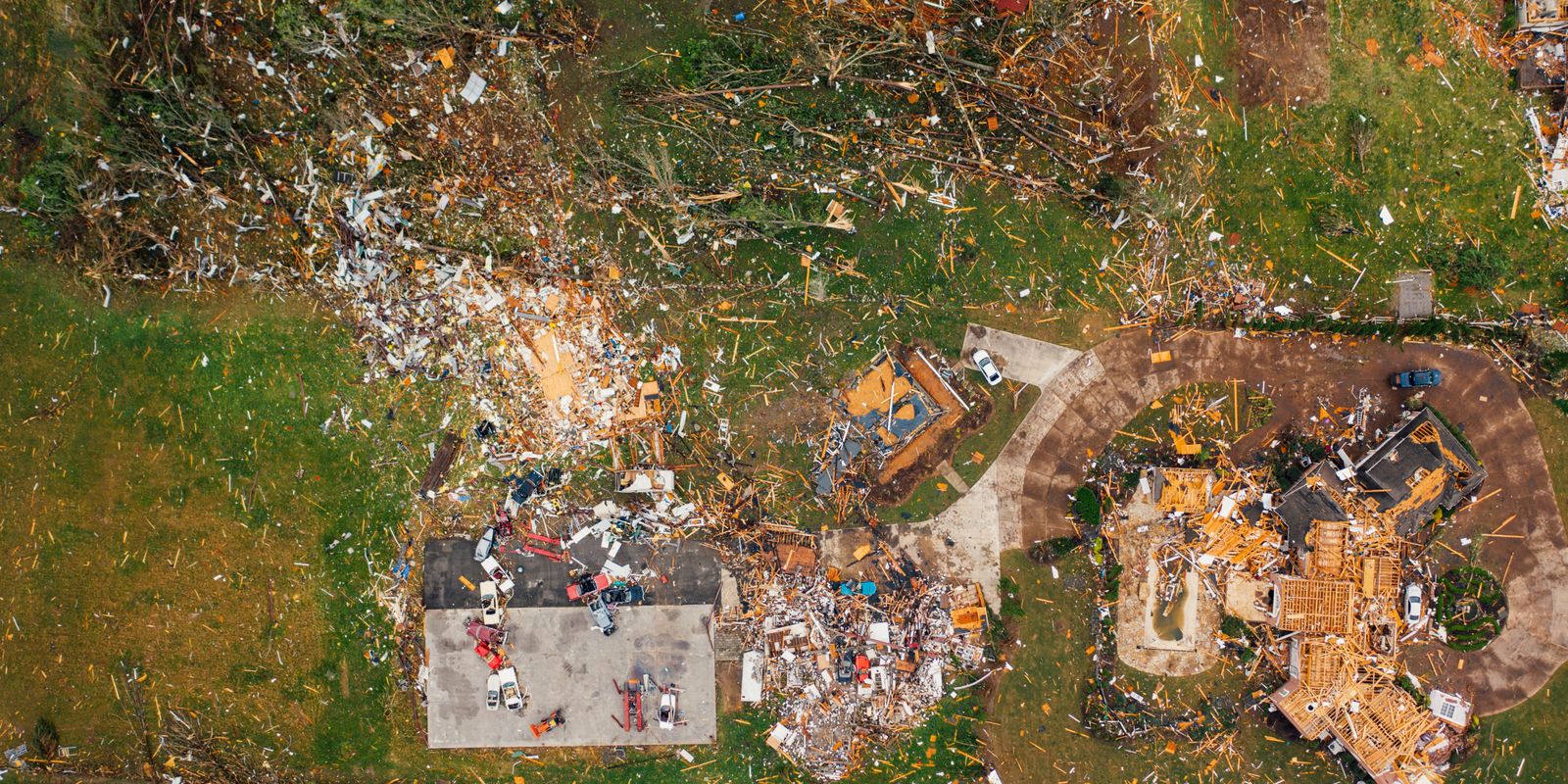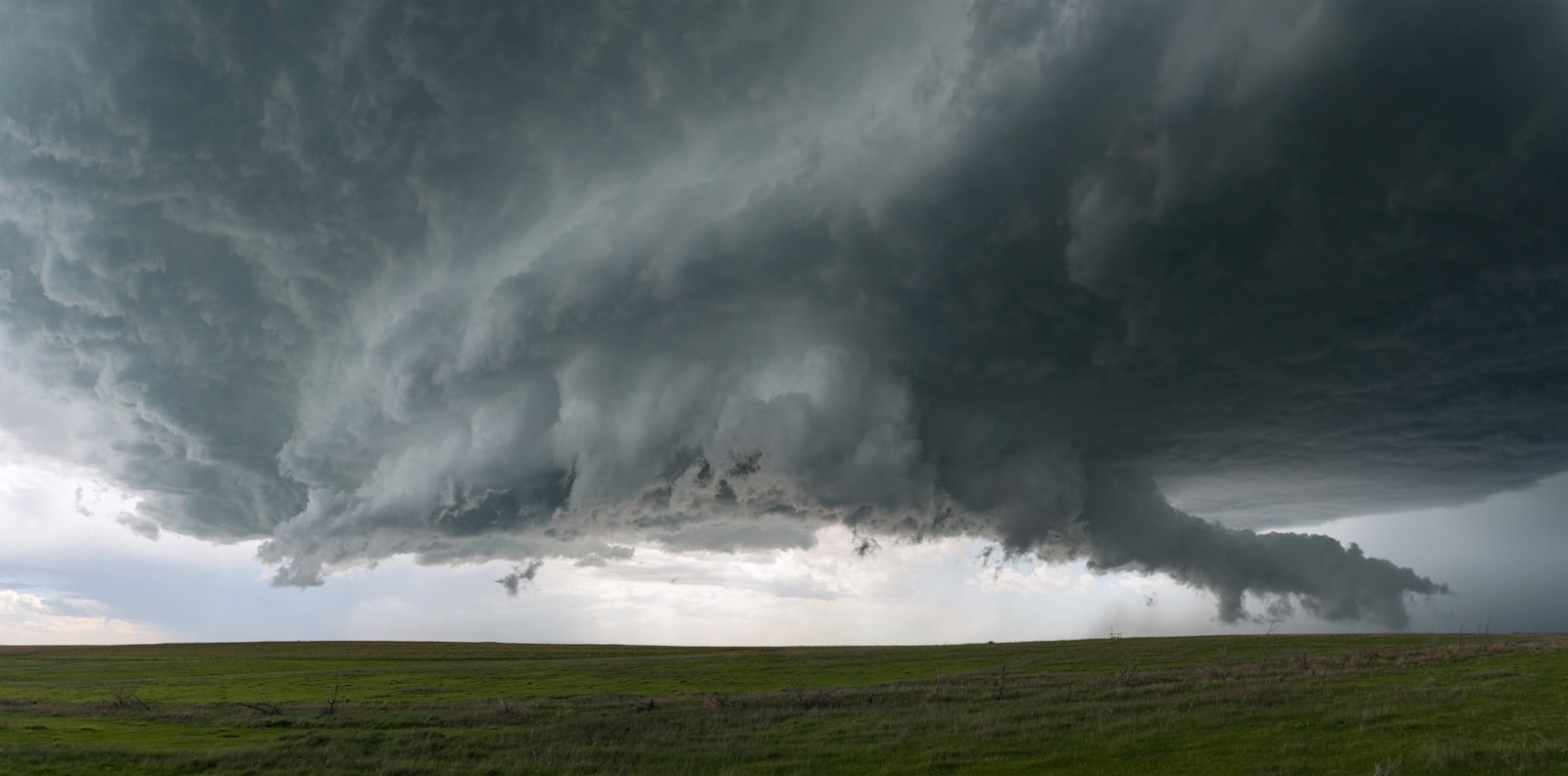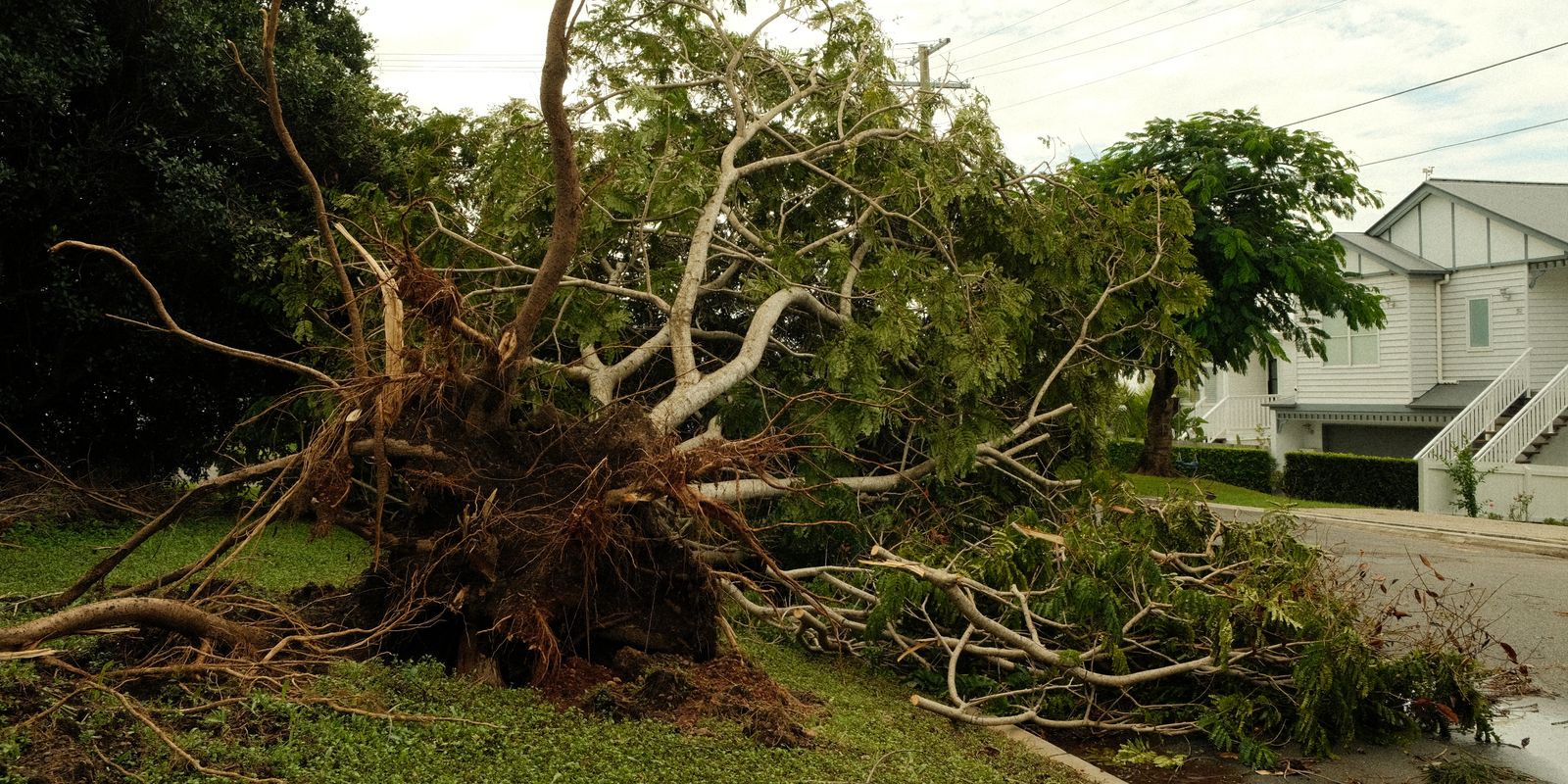
North Mississippi storms bring wind, and wind brings down trees. Mississippi logged 111 tornadoes in 2025 — fourth in the nation — and Alabama, ten miles down the road from Belmont, ranked fifth with 72. The straight-line winds riding along with those systems do plenty of damage on their own, from the old oaks in Iuka and Tupelo neighborhoods to the tree lines around Pickwick.
When one comes down, the first question usually isn’t “how do we clean this up.” It’s “whose insurance pays for this?” The answer depends on the scenario — so let’s walk the common ones.
Your Tree Falls on Your House
The straightforward case. A storm rolls through and a tree in your own yard lands on your roof.
Your own homeowners policy typically responds — covering the damage to the home, and often some amount toward removing the tree debris, up to a set limit. That’s generally true whether the tree was healthy or not, as long as the cause was a covered peril like wind.
Your Tree Falls on a Neighbor’s House
Now flip it. Your tree, their roof.
This one surprises people: it’s typically the neighbor’s homeowners policy that responds, not yours. The general principle in most standard policies is that each policy covers its own structure, regardless of whose tree did the damage — as long as it was a covered peril like a storm.
Where it gets more complicated is a tree that was already dead, diseased, or obviously hazardous — and you knew it and let it stand. Then liability questions can enter the picture, and the neighbor’s insurer may look hard at whether the tree was negligently maintained. Which is the practical argument for dealing with a clearly dying tree before storm season does it for you.
A Neighbor’s Tree Falls on Your House
The mirror image. Their tree, your roof — and your own policy is typically the one that responds, covering your home and, depending on the policy, a portion of debris removal. You generally don’t have to chase your neighbor’s insurance first, even though it was their tree.
The Dead-Tree Dispute
This is the version that strains fences and friendships. You’ve told a neighbor their dead tree looks unsafe. It eventually falls on your property. Now their insurer may face a liability claim — if it can be shown they knew about the hazard and didn’t address it.
Negligence gets examined carefully in these cases, and the answers are rarely clean. None of this is legal advice, and specific claims turn on policy language and the facts. But one practical step genuinely helps: if a neighbor’s tree worries you, put the concern in writing — a dated letter, a text, an email — before a storm ever tests it.
What About the Car in the Driveway?
One more scenario, because it comes up constantly: the tree misses the house and lands on your truck.
That’s not a homeowners claim at all — it’s an auto claim, under the comprehensive portion of your auto policy. Comprehensive is the optional coverage that handles what happens to your vehicle rather than what you do with it: falling objects, hail, flood. If you carry liability only, a tree across the hood is your problem. Worth checking before storm season, especially if there’s a paid-off vehicle in the household that quietly got dropped to minimum coverage somewhere along the way.
The Common Thread — Plus a Short Checklist
In almost every version of this story, the rule of thumb holds: your policy covers your structure, whoever’s tree it was, as long as the cause was covered. Liability only tends to shift when someone ignored a known hazard.
Before the next storm season:
- Walk your property line and look honestly at every mature tree — dead limbs, lean, fungus at the base.
- Deal with obvious hazards now, while it’s a tree-service bill instead of a claim.
- Put concerns about a neighbor’s tree in writing, politely and dated.
- Check your policy’s debris-removal limit — it’s smaller than most people assume.
- Call or text us at 662-454-7831 if you’re not sure what your policy says. We’ll read it with you.
Related Coverage: Home Insurance
Fallen-tree claims come up more often around here than you’d think — and how your policy handles them is knowable in advance. Our home insurance page covers the details, and we shop 20+ carriers to get the structure of the policy right.
Want yours read before the wind does? Call or text 662-454-7831. A real person picks up, and we’ll go through it in plain English.