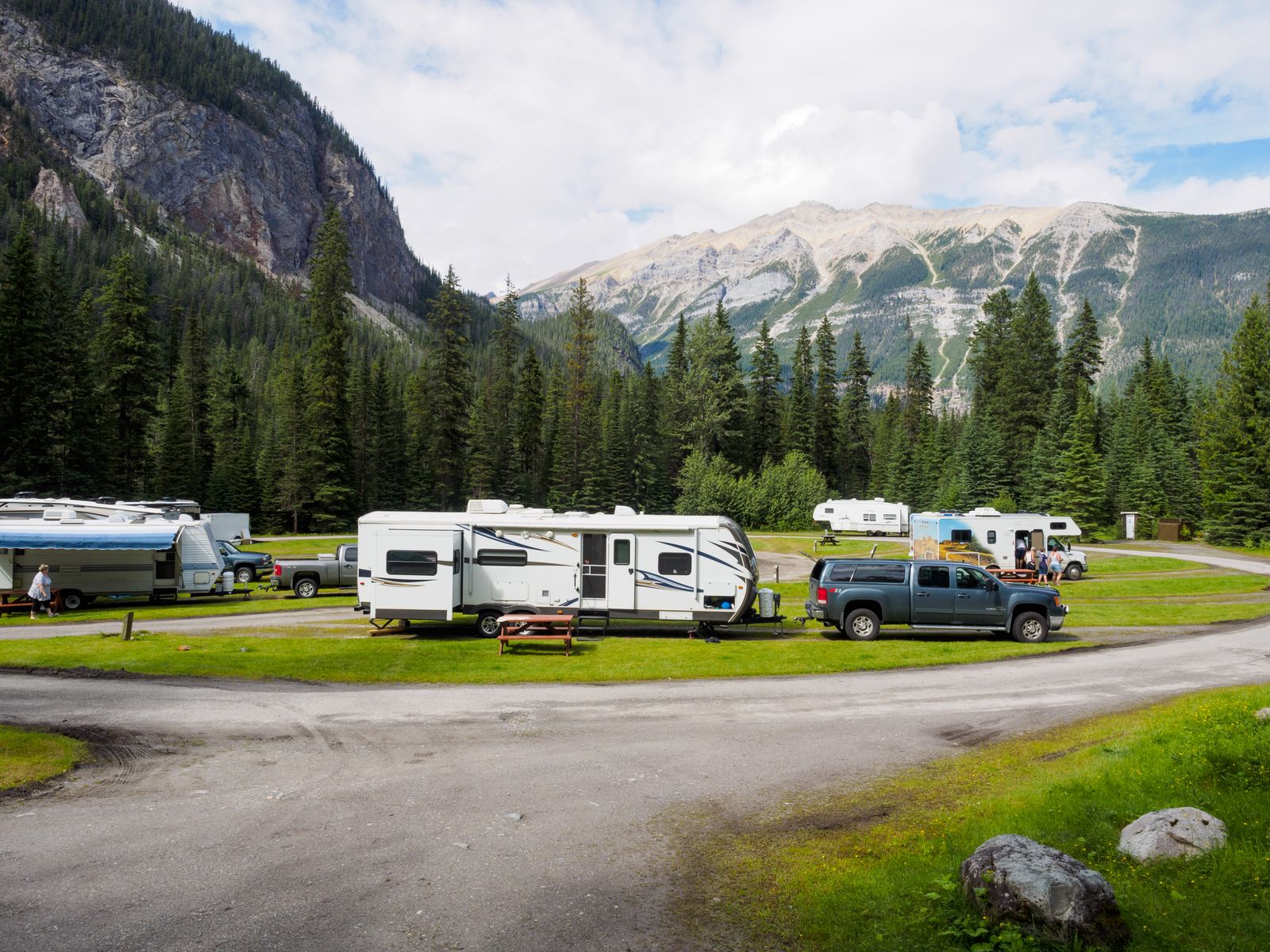
A pop-up camper behind a pickup, a fifth wheel set up for the season near Pickwick, a Class C motorhome easing down the Natchez Trace — all three are “RVs.” They are not insured the same way. If you’re shopping coverage, the differences matter a lot more than the label.
Drivable or towable — the first fork in the road
A motorhome — Class A, B, or C — has an engine and a driver’s seat, so it’s insured like a motor vehicle: liability, collision, and comprehensive, built around the fact that it’s out on the road under its own power.
A travel trailer or fifth wheel is a different animal. It doesn’t drive, so it isn’t insured like something that does. While you’re towing it, liability generally rides on the policy covering the truck doing the pulling. But here’s the part that surprises people — nothing on that auto policy protects the trailer itself. The trailer needs its own physical damage coverage for collision, fire, theft, and weather, plus anything permanently attached to it.
Mixing those two up — or assuming one policy quietly covers the other — is one of the most common gaps we see. It’s the kind of thing that looks fine on paper right up until the claim.
Full-timing changes the whole equation
Some folks camp a few weekends a year. Some live in the rig.
If your RV is your permanent residence, that’s not a bigger version of the same risk — it’s a different risk entirely, and it generally calls for a specific full-timer policy. Full-timer coverage works more like a homeowners policy: higher liability limits, coverage shaped around the fact that this is where you live, not where you vacation. A standard RV policy typically isn’t built for everyday, full-time use, and carriers care about the difference. If this is you, say so when you get quoted. It changes what “right” looks like.
The stuff inside counts too
An RV fills up fast — cookware, electronics, clothes, camp chairs, fishing gear, maybe a generator. Personal effects coverage is what replaces those belongings if they’re stolen or damaged.
Picture your travel trailer broken into at a campground and cleaned out. Would you want to replace all of that out of pocket? That’s the gap this coverage closes, and it’s overlooked constantly — until it isn’t.
While you’re at it, walk through the rig with your phone and take photos of what’s inside. A five-minute video makes a theft claim a matter of record instead of memory.
Parked, awning out, guests over
Two more RV-specific pieces worth knowing about.
RV roadside assistance. A dead battery two hours from home is a different problem in a 30-foot motorhome than in a sedan. RV-specific roadside coverage accounts for the size and the specialized towing these rigs need.
Vacation liability. This covers you while the RV is parked and being used as a temporary living space — campsite set up, awning out, neighbors over for supper. A standard auto policy isn’t designed for that situation, because at that point the RV isn’t really acting like a vehicle. It’s acting like a house.
Six things to check before you sign
- Confirm which kind of unit you have — drivable or towable — and that the policy is actually written for it.
- If it’s towable, verify the trailer has its own physical damage coverage, not just liability from the tow vehicle.
- Be honest about usage. Weekend trips, seasonal setup, or full-time living each point to a different policy.
- Add up what’s inside and ask whether personal effects coverage matches that number.
- Ask about vacation liability if you camp with family or entertain at the site.
- Check the roadside assistance — the RV-sized version, not the sedan version.
Related Coverage: RV Insurance
We write RV insurance across Mississippi, Alabama, and Tennessee — motorhomes, travel trailers, fifth wheels, campers, and the full-timers who call the rig home.
We’re not trying to be the fastest quote in your inbox. We take the time to match the policy to how you actually use the rig — then we shop it across 20+ carriers. Call or text 662-454-7831 and a real person picks up. We’ll walk through it in plain English.