Belmont is about ten miles from the Alabama line. Pickwick puts Tennessee inside an easy drive. Around here, crossing a state line isn’t a trip — it’s a commute, a job site, a Saturday.
Your insurance doesn’t stop at the sign. But it doesn’t behave identically on both sides of it either. Here’s what actually changes.
Your liability coverage travels. The math around it doesn’t.
Standard personal auto policies are written to follow you throughout the United States, and they include out-of-state provisions that adjust your liability limits upward to meet another state’s minimums if yours happen to be lower.
That’s the good news, and it’s genuinely reassuring. The bad news is that “meets the minimum” is a floor, not a plan.
Look at what the three states actually require:
- Mississippi: $25,000 per person (limited to a single accident), $50,000 per accident for bodily injury, and $25,000 per accident for property damage.
- Alabama: 25/50/25 — $25,000 bodily injury per person; $50,000 maximum for all bodily injuries in any one accident; $25,000 maximum property damage per accident.
- Tennessee: $25,000 for each injury or death per accident; $50,000 for total injuries or deaths per accident; $25,000 for property damage per accident.
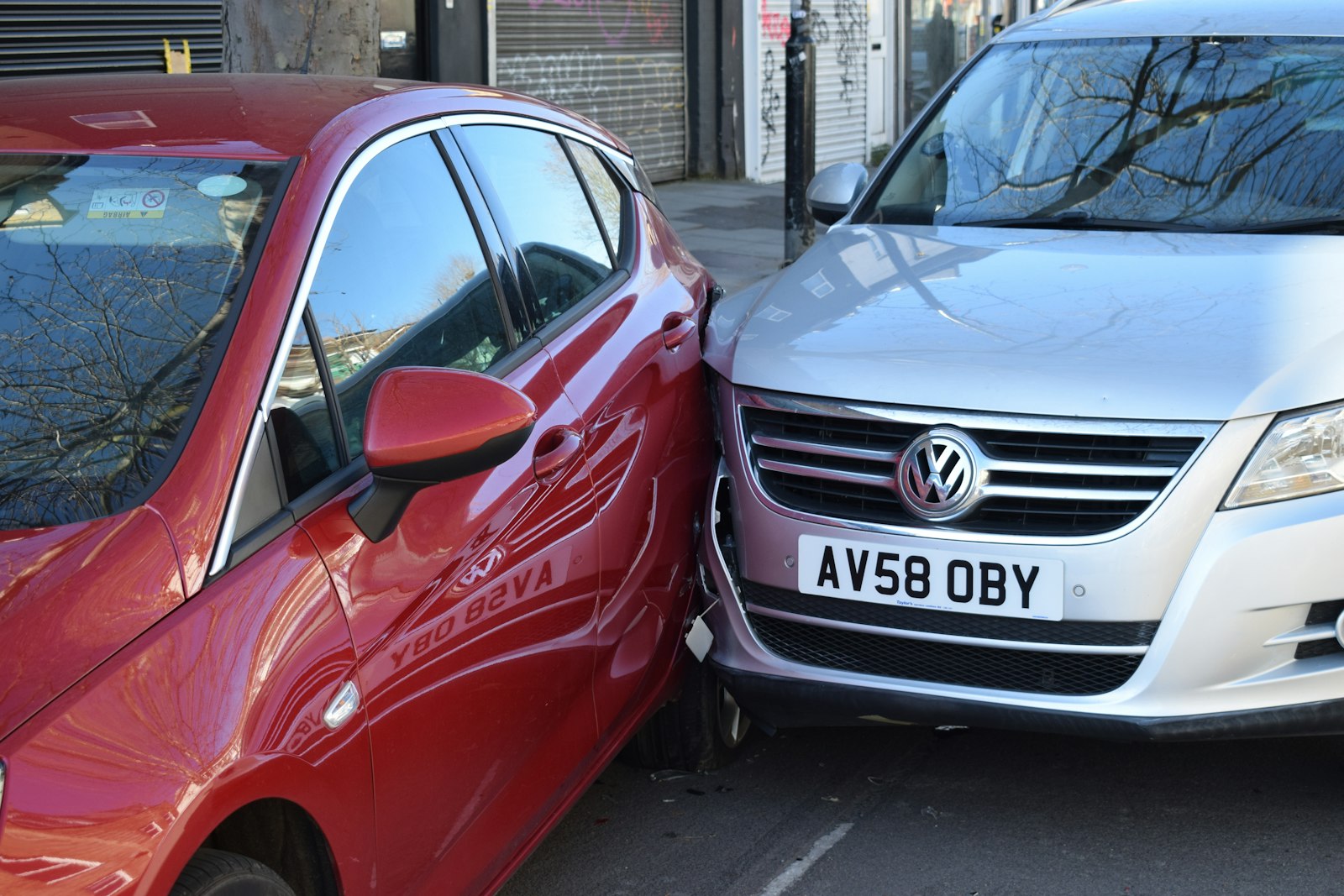
The numbers line up. The point isn’t that they differ — it’s that all three are low relative to what a real accident costs. A three-car pileup on Highway 72 doesn’t cap itself at $50,000 because that’s what the state requires. Anything above your limit is yours personally.
The uninsured driver problem is worst on the Mississippi side
This is the number that should drive your decision, and it’s not close.
Mississippi has the highest estimated uninsured-motorist rate in the United States — 28.2%, rank 1. Better than one in four drivers. Tennessee ranks 5th at 21.3%. Alabama ranks 15th at 16.8%.
Think about what that means for a daily route that starts in Tishomingo County and ends in Colbert or Franklin County. You are moving between the country’s worst uninsured-driver environment and one that’s meaningfully better, twice a day, and you’re exposed to whichever one you happen to be in when someone runs a light.
Your liability coverage protects the other guy. Uninsured and underinsured motorist coverage is the part that protects you — your injuries, your passengers, your lost wages — when the driver who hit you has nothing. In Mississippi that’s not a nice-to-have. It’s the coverage the state’s own statistics argue for on every quote.
Using your own truck for work — across a line
Here’s the one people don’t see coming.
Personal auto policies commonly exclude vehicles used in the business. Not “driving to work” — that’s ordinary commuting and it’s covered. The exclusion is about using the vehicle for the business: hauling materials, making deliveries, running service calls, carrying tools to a job.
Now add a state line. If you live in Mississippi and perform work in Alabama in your own truck, you’ve got two questions stacked on each other: is this business use, and whose rules apply when the loss happens. If you’re a sole proprietor doing contract work across the line, or an employee running errands in your personal vehicle for your employer, the answer determines whether a claim gets paid under a personal policy, a commercial auto policy, or a hired-and-non-owned endorsement — or gets declined.
Ask before the wreck. It’s a ten-minute conversation and it’s free.
Two states, two workers’ comp systems
If you employ people on both sides of the line, this compounds.
Workers’ compensation is a state system, and Mississippi and Alabama don’t word their rules the same way. Mississippi’s Workers’ Compensation Commission states that all employers with five (5) employees regularly employed are required to provide workers’ compensation insurance coverage — a threshold we can point to in a Commission publication dated 2013, so confirm the current rule with the Commission directly. Alabama’s Department of Labor states that any business that has five (5) or more employees, other than contractors, is required by law to have workers’ compensation coverage.
Same number, different fence. Which state’s system covers a given employee can depend on where the work is performed, where the person was hired and where the business is based — and for a crew that works in both states in the same week, that’s a real question, not a formality.
This is general information, not legal advice. The state agencies are the authority.
Why three-state licensing isn’t a marketing line
An agent licensed only in Mississippi can write your car. They can’t write the Alabama piece of your business, and they can’t tell you much about the Tennessee side of your lake house.
We’re licensed and writing in Mississippi, Alabama and Tennessee, and we shop 20+ carriers across all three. That matters here for one unglamorous reason: your life doesn’t respect the border, so your coverage review shouldn’t have a seam in the middle of it.
A Five-Step Check for Anyone Who Crosses the Line
- Pull your auto declarations page and find your liability limits. Compare them to what one serious injury actually costs — not to the state minimum.
- Confirm you carry uninsured and underinsured motorist coverage, and check the limit.
- Write down every way you use a personal vehicle for work, and in which state, then ask whether it’s business use.
- If you employ anyone, list which state each person works in and where they were hired.
- Tell your agent about every state you regularly drive, work, or keep property in — before the policy is written, not after a claim.
Related Coverage: Auto Insurance
Our auto insurance page covers how we build a policy for drivers whose week crosses two or three states, including how we set uninsured motorist limits in the state with the highest uninsured rate in the country.
Coverage descriptions here are general and your policy language governs. State requirements are set by the state departments of insurance and revenue.
We’re not trying to be the fastest quote in your inbox. We want to be the one that’s actually right. Call or text 662-454-7831 — Belmont, Tupelo or Iuka, Monday through Friday, 8:00 to 4:30. A real person picks up.