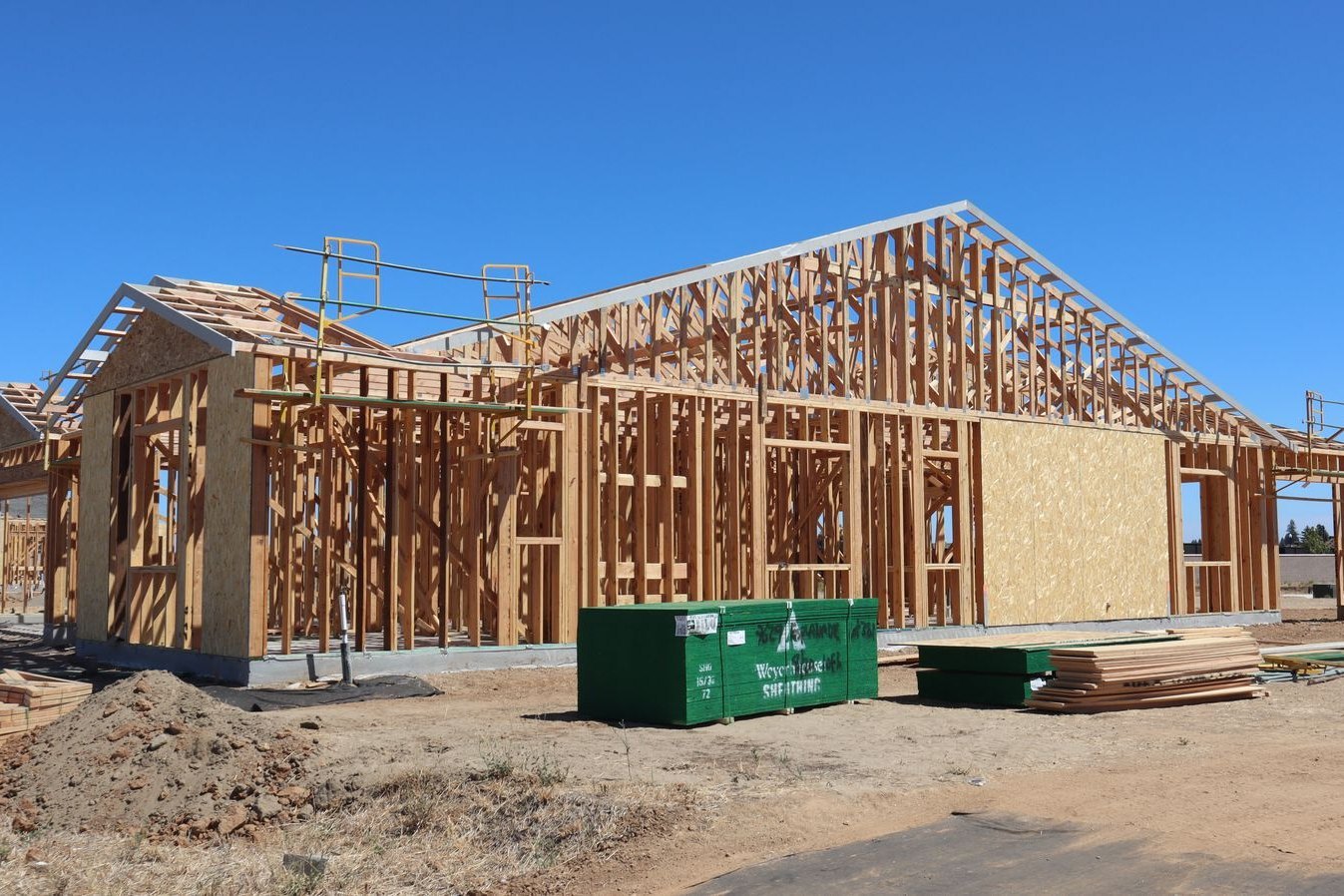
A contractor in Tupelo starts a remodel. The walls come open, the roof comes off in sections, lumber and windows stack on the lot, and somebody asks whether the existing commercial property policy on the building still answers for a fire while the place is a shell. Often the honest answer is: that policy was written for a finished building, and a project in the course of construction is a different exposure.
The product that sits in that gap is usually called builders risk — also course-of-construction coverage. It is temporary property insurance for the building while it is being built or substantially renovated.
What it is, in plain language
The International Risk Management Institute’s definition is short enough to quote for a reason. A builders risk policy is property insurance designed to cover property in the course of construction. IRMI also notes there is no single standard form. Many builders risk policies are written on inland marine forms rather than ordinary commercial property forms. Coverage is usually written on an all-risks basis and often reaches materials at the site, at off-site storage, and in transit — the lumber on the truck counts, not only the lumber already nailed up.
The limit is commonly based on the estimated completed value of the project, whether the policy is written on a completed-value basis or a reporting form. Underinsure the finished number and the claim arithmetic starts to look like the coinsurance problem we wrote about earlier this year.
Why a finished-building policy is usually the wrong tool mid-project
Commercial property forms assume an occupied or occupiable building with known construction, known occupancy, and known protection. Mid-project, those assumptions break. Open framing, temporary heating, stored materials, multiple trades on site, and partial occupancy are underwriting and form questions that a static building policy may not have been asked to answer.
The reverse mistake is just as common: leaving a builders risk policy in force after the building is done and occupied, instead of moving to a regular commercial property form. Builders risk is temporary by design. Coverage typically ends when construction is complete, the building is occupied, or it is put to its intended use — whichever trigger the form names first. After that, the wrong policy is still the wrong policy.
Who usually needs to be named
Owners, general contractors, and sometimes lenders or project managers all have money in the same pile of lumber. Forms vary on who can be a named insured and how payment is split when more than one interest is listed. Contract documents often require the owner and the GC to be on the same builders risk policy; whether that is how a given job is written is a contract question and a declarations-page question, not something settled from the sidewalk.
Builders risk is also not the same as the contractor’s general liability policy, workers’ compensation, or the tools-in-the-truck inland marine that follows equipment. Those answer different losses. Mixing them up is how a fire claim and a third-party injury claim get sent to the wrong carrier on the same afternoon.
The wrinkle people miss on remodels
New construction is the clean case. Remodels are messier. Part of the building may still be occupied while another part is open to the weather. Some forms and some underwriters treat that as builders risk; others want the existing structure on a commercial property form and only the renovation materials on a builders risk or installation floater. There is no universal rule you can recite without reading the job’s actual paperwork.
What to look for before the first delivery of lumber
Three things, none of them long:
Whether any policy currently on the building was written for a finished occupancy or for construction. What the builders risk form uses as the completed-value limit, and whether that number still matches the bid. When the form says coverage ends — completion, occupancy, or intended use — so nobody is surprised the week the certificate of occupancy shows up.
Forms vary. The contract and the policy are the only documents that answer for a specific job. If you want somebody to read those two side by side, see our business insurance page, stop by the Tupelo office, or call or text 662-454-7831.
This article is general information about how coverage typically works, not advice about your specific situation. Your policy is the contract, and it’s the only thing that says what you have. If you’d like someone to read it with you, that’s what we’re here for.